

The Rules Behind the Racing
Every greyhound race you bet on in the UK operates within a regulatory framework set by the Greyhound Board of Great Britain (GBGB). The GBGB licenses tracks, registers dogs, regulates trainers and kennel hands, enforces racing rules, and oversees the welfare standards that govern the sport from a greyhound’s racing career through to retirement. It’s the governing body, and its rules determine what happens on the track and in the kennels — even if most punters never read a single clause.
Understanding the basics of GBGB regulation isn’t just a matter of sporting interest. It’s directly relevant to your betting. Drug testing, race integrity, grading decisions, and welfare-driven rule changes all affect the racing product you’re wagering on. A dog withdrawn on welfare grounds, a trainer sanctioned for a testing violation, a rule change that alters how grades are calculated — these developments shape the racecard, and the better-informed punter is the one who understands the regulatory context behind the entries.
Stay informed at greyhoundracingbettinguk.
GBGB’s Role and Remit
The GBGB is the self-regulatory body for licensed greyhound racing in Great Britain. It operates under a framework agreed with the UK government and works alongside the Gambling Commission, though its primary focus is the integrity and welfare of the sport rather than gambling regulation per se.
Its core functions include licensing and inspecting tracks to ensure they meet safety and operational standards; registering every greyhound that races at a licensed track, maintaining a database of ownership, breeding, and racing history; licensing trainers, kennel hands, and other racing officials; setting and enforcing the rules of racing — covering everything from race conditions and trap procedures to prohibited substances and disciplinary processes; and managing the sport’s welfare agenda, including injury reporting, veterinary standards, and retirement and rehoming programmes.
There are currently around 20 licensed tracks in operation across Great Britain, though the number has fluctuated as venues have closed or opened over the years. Every meeting at a GBGB-licensed track operates under the same set of rules, which provides a consistent standard for punters and participants alike. Independent or “flapping” tracks — unlicensed venues that operate outside GBGB regulation — do exist but are not covered by the same standards and are not typically offered by mainstream bookmakers.
For punters, the distinction matters. Betting on GBGB-regulated racing means the race was conducted under a defined set of rules, the dogs were tested for prohibited substances, the results were officially recorded, and any dispute or irregularity is subject to a formal disciplinary process. This regulatory layer underpins the integrity of the product you’re betting on.
Welfare Standards and Drug Testing
Animal welfare is the most scrutinised aspect of UK greyhound racing, and the GBGB’s welfare standards have evolved significantly over the past decade in response to public concern, media attention, and the organisation’s own welfare strategy.
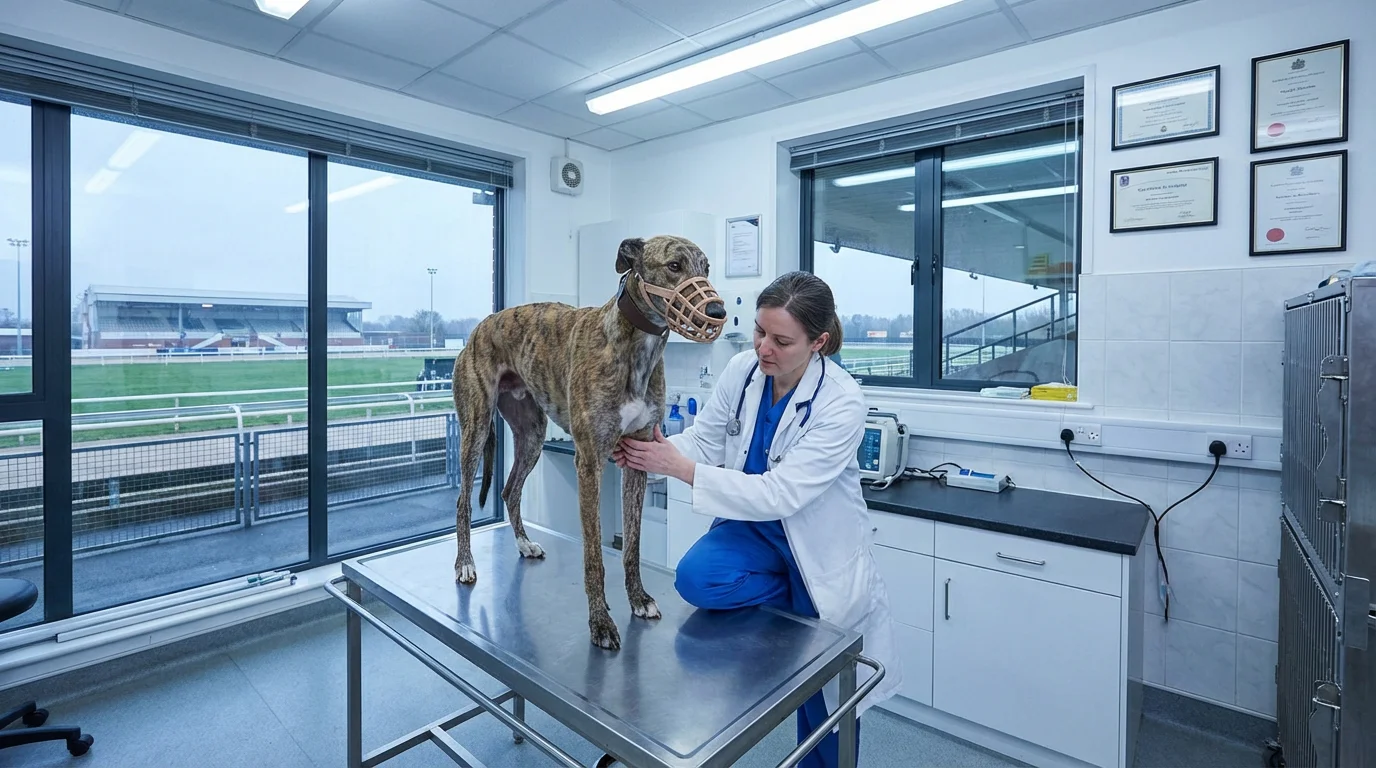
Every GBGB-licensed track must have a veterinary surgeon present at every meeting. Dogs are inspected before racing and treated immediately if injured during a race. Tracks must meet minimum standards for track surface quality, lighting, kennel facilities, and emergency veterinary care. Injury data is collected centrally and published, allowing the GBGB and independent observers to track trends and identify venues or race types with higher injury rates.
Drug testing is a pillar of race integrity. The GBGB conducts routine and targeted testing at meetings across the country, collecting urine and occasionally blood samples from dogs selected at random or because of a specific concern. The prohibited substances list includes performance-enhancing drugs, sedatives, and a range of other compounds. A positive test results in an inquiry, with sanctions ranging from fines and suspensions for trainers to the disqualification of the dog’s result.
The testing regime matters for punters because a positive test can lead to a race result being overturned. If you backed a winner that is subsequently disqualified following a drug test, the settlement of your bet depends on your bookmaker’s rules — most settle bets at the result declared on the day, but amended results can affect forecast and tricast dividends. Awareness of the testing regime, and of any trainers currently under investigation or recently sanctioned, is a practical form of due diligence.
Welfare-driven rule changes can also affect the racing product. The GBGB has introduced changes in recent years aimed at reducing injury rates, including modifications to racing surfaces, restrictions on the frequency with which dogs can race, and enhanced standards for track maintenance. Each of these changes subtly alters the racing environment — affecting track times, surface conditions, and race scheduling — in ways that attentive punters should factor into their analysis.
Retirement and Rehoming
What happens to greyhounds after their racing career ends is the welfare question that attracts the most public attention, and it’s an area where the sport has made measurable progress.
The GBGB requires that every registered greyhound’s post-racing destination is recorded. Trainers must notify the GBGB when a dog leaves their kennel, whether it’s retired to a rehoming organisation, returned to its owner, or transferred to another purpose. This traceability system — though not without its critics — represents a significant improvement on earlier decades when the post-racing fate of many greyhounds was unrecorded.
A network of rehoming organisations operates across the UK, specialising in the transition of retired racing greyhounds to domestic homes. The Greyhound Trust (formerly the Retired Greyhound Trust, rebranded in 2017), independent rescue charities, and breed-specific adoption groups collectively rehome thousands of dogs each year. The GBGB financially supports these efforts through levies on the racing industry and direct funding to rehoming partners.
The retirement and rehoming picture is not without challenges. The number of greyhounds requiring rehoming each year exceeds the number of available homes, which means waiting times can be long and kennel space is often at capacity. The GBGB and the broader industry acknowledge this gap and continue to invest in expanding rehoming capacity and promoting greyhound adoption to the public.
For punters, the welfare and rehoming dimension is part of the broader social context of the sport they bet on. Supporting bookmakers that contribute to welfare levies, attending tracks that maintain high welfare standards, and being aware of the industry’s ongoing welfare commitments are all ways of engaging with greyhound racing as a responsible participant rather than a passive consumer.
What Punters Should Know
The regulatory framework behind UK greyhound racing exists to ensure that the sport is fair, that the dogs are protected, and that the results you bet on are produced under consistent, audited conditions. You don’t need to read every GBGB rule to benefit from this framework — but understanding that it exists, and knowing the basics of how it operates, makes you a more informed participant.
Also read our legal information.
When a dog is withdrawn from a race, check whether it’s a welfare-related withdrawal or a routine scratch. When a trainer appears in the industry press for a disciplinary matter, note it. When rule changes are announced — new testing protocols, grading amendments, track surface standards — consider how they might affect the racing you bet on. The regulation is the foundation; your analysis sits on top of it. The stronger your understanding of the foundation, the more reliable the analysis built on it.
