
A Different Kind of Odds
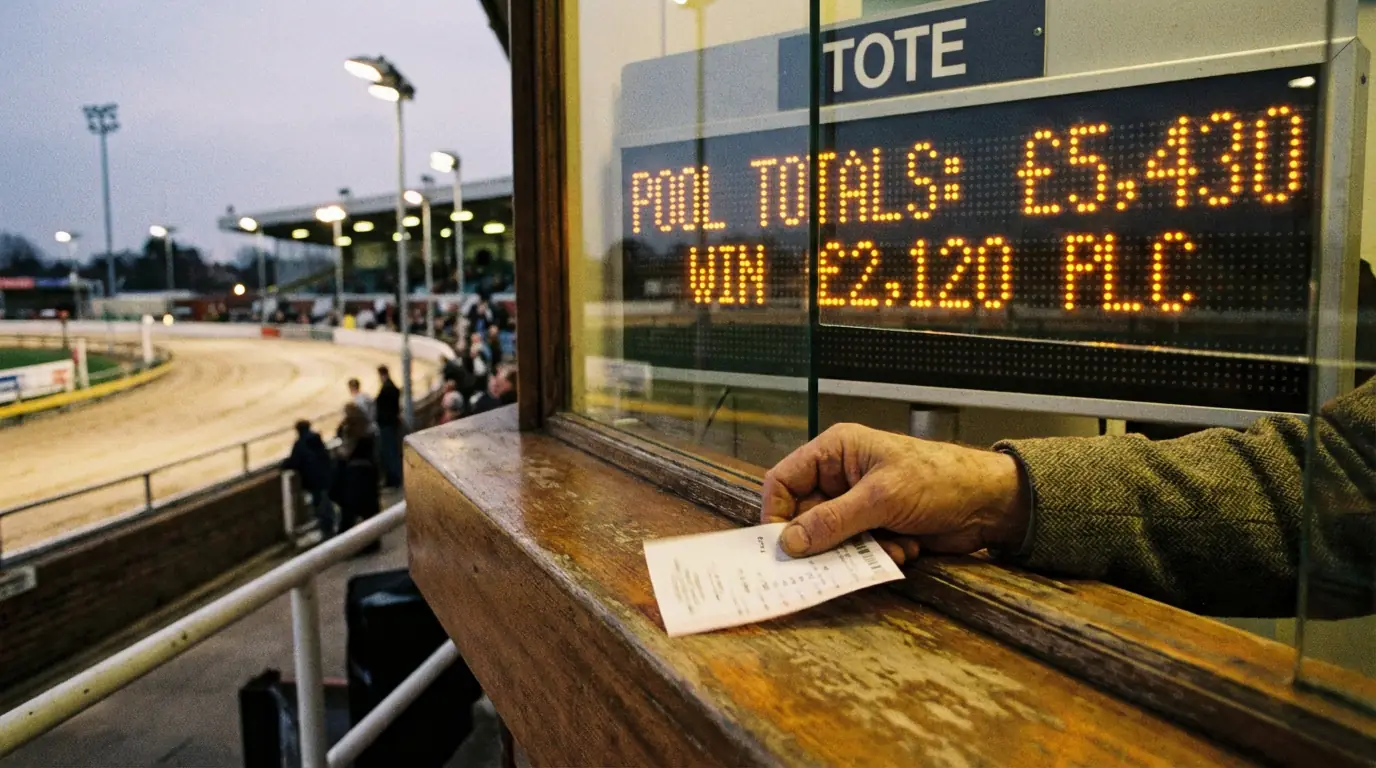
The tote doesn’t set prices — the punters do. That single distinction separates pool betting from everything else on a greyhound betting site. With fixed-odds betting, the bookmaker decides the price and you decide whether to take it. With pool betting, every stake from every punter goes into a shared pot, and the payout is calculated by dividing that pot among the winning ticket holders after the operator takes its commission. The odds are not known until the pool closes, which means you’re betting without knowing exactly what you’ll be paid if you win.
Pool betting has deep roots in greyhound racing. For decades, the tote was the primary way to bet at UK tracks, and at many venues the on-course tote remains a feature of the race-night experience. Understanding how it works — and when it offers advantages over the fixed-odds market — is useful for any punter who visits tracks or who encounters tote markets on bookmaker websites.
Find more bet type guides at greyhoundracingbettinguk.
How Pool Betting Works
The mechanics are straightforward. All bets on a particular race and market type are combined into a single pool. After the race, the operator deducts a commission (the “take-out”) — typically between 15% and 28% depending on the pool type and the operator — and the remaining money is distributed among the holders of winning tickets.
Here’s a simplified example. One hundred punters each stake £10 on the win pool for a six-dog race. The total pool is £1,000. The take-out is 20%, leaving £800 to be distributed. If thirty of those punters backed the winning dog, each receives £800 divided by 30 = £26.67 (including their original £10 stake). The effective odds were approximately 1.67/1. If only five punters backed the winner, each receives £800 divided by 5 = £160, equivalent to approximately 15/1.
The payout is inversely proportional to the popularity of the winner. A heavily backed favourite produces a small dividend because many people share the pool. A lightly backed outsider produces a large dividend because the pool is split among fewer winners. This is the defining characteristic of pool betting: the dividend depends on where the crowd put its money, not on a bookmaker’s assessment of probability.
The dividend is declared after the race — once all bets are in, the pool is closed, and the result determines the split. When you place a tote bet before the race, you know your stake but not your return. Some pools display an approximate indicative dividend based on the money already in the pool, but this can change significantly in the final minutes before the off as late money comes in.
Pool Types at the Track
UK greyhound tracks typically offer several pool types through the on-course tote.
Win pool. The simplest: pick the winner. All stakes go into one pot, and the pot is divided among those who backed the winning dog. This is the most liquid pool and usually the one with the lowest take-out percentage.
Place pool. Pick a dog to finish first or second. Place pools generally pay lower dividends than win pools because the money is split across a larger number of winning tickets — anyone who backed a dog that finishes in the top two collects.
Forecast pool. Pick the first two finishers in the correct order. The forecast pool produces larger dividends because the level of difficulty is higher. The pool is divided only among punters who correctly predicted both first and second in the right order. Forecast pool dividends on greyhound racing can be substantial — even modest outsiders in the first two can generate dividends of £50 or more to a £1 stake.
Tricast pool. Pick the first three finishers in the correct order. The tricast pool is the highest-difficulty, highest-dividend pool available at most tracks. Landing a tote tricast is rare, but the dividends can run into three figures and occasionally four.
Jackpot and placepot pools. Some tracks offer accumulator-style pools where you pick the winner (or a placed finisher) in a sequence of consecutive races. These pools carry over if there’s no winner, occasionally building into large jackpot figures. They’re popular with casual trackgoers and produce the largest single payouts, but the difficulty level is extreme.
Tote vs Fixed Odds
The practical question for punters is when, if ever, the tote offers better value than fixed-odds betting. The answer depends on the specific race, the specific market, and where the crowd’s money flows.
On heavily backed favourites, the tote almost always pays less than fixed odds. When most of the pool’s money is on one dog, the dividend for that dog is compressed. A favourite at 6/4 in the fixed-odds market might return the equivalent of just evens or worse through the tote, because the take-out and the concentration of money reduce the payout. For short-priced selections, fixed odds are nearly always the better choice.
On outsiders and in forecast or tricast pools, the tote can offer significantly better value. When the crowd backs the favourite and ignores a genuine contender at a bigger price, the tote pool for that contender grows proportionally larger. A dog that the bookmaker prices at 8/1 might produce a tote dividend equivalent to 12/1 or 15/1 if the betting public has neglected it. This is where pool betting comes into its own: the tote rewards contrarian thinking more directly than fixed-odds markets, because you’re sharing the pool with fewer people.
Forecast and tricast pools are where the tote’s advantage is most pronounced. The fixed-odds forecast and tricast dividends are calculated by formula; the tote forecast and tricast dividends are calculated from the actual pool. In races where an unexpected combination fills the first two or three places, the tote dividend can exceed the fixed-odds equivalent by a wide margin because so few punters picked the correct permutation.
The Crowd Sets the Price
Pool betting is the purest form of market-driven odds in greyhound racing. There is no bookmaker making a judgement about probability — there is only the crowd’s collective behaviour, expressed through where it puts its money. That simplicity is both the appeal and the limitation.
The appeal is that the tote can’t be “wrong” in the way a bookmaker can. A bookmaker can misprice a dog; the tote simply reflects what people are willing to bet. If the crowd is smart, the tote dividends will closely mirror true probabilities. If the crowd is biased — overvaluing recent winners, backing dogs on name recognition, ignoring trap draw — the tote creates opportunities for punters who see what the crowd doesn’t.
Also see our bet types.
The limitation is the take-out. The operator’s commission is a fixed drag on every pool, and it’s often higher than the bookmaker’s overround on the equivalent fixed-odds market. Over the long term, this higher commission makes the tote a more expensive medium for betting unless you’re consistently finding dividends that exceed what the fixed-odds market offers. For most punters, the tote is best used selectively — on specific races and specific pool types where the crowd’s behaviour creates a clear pricing opportunity — rather than as a default alternative to fixed odds.
