

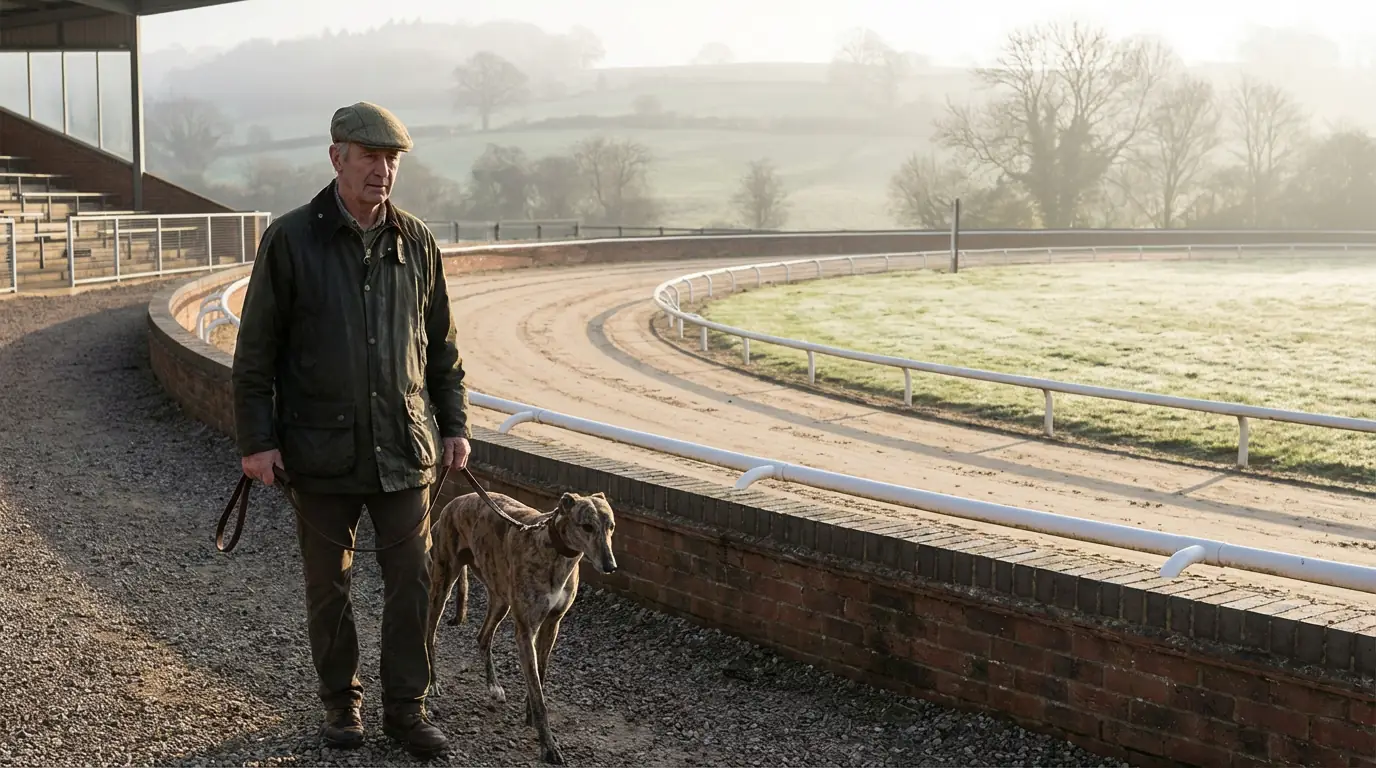
The Name Above the Dog
Every dog on the racecard has a trainer listed alongside it, and most punters glance past that name without a second thought. The dog’s recent form, its trap draw, its time — these feel like the hard facts. The trainer’s name feels like background information, a piece of administrative data rather than a betting factor. That’s a missed opportunity.
In greyhound racing, the trainer controls virtually everything about a dog’s preparation: its fitness, its diet, its exercise regime, the timing of its trial runs, and the decisions about which races it enters and at which distances. Two dogs of identical ability, managed by different trainers, can produce very different results over the course of a season. Understanding which trainers are in form, which kennels produce consistent runners, and which operations peak at certain times of year adds a layer of analysis that the average punter ignores entirely.
Get more form guides at greyhoundracingbettinguk.
Why Trainer Form Matters
Greyhound trainers in the UK operate kennels that typically house between ten and fifty racing dogs, though the largest operations handle more. The trainer is responsible for the day-to-day management of every dog in the kennel — which means that the general condition, fitness, and sharpness of dogs from the same kennel tend to move together. When a kennel is running well — dogs are fit, healthy, and peaking — you’ll see a cluster of good results across multiple runners from the same trainer. When a kennel is struggling — perhaps dealing with illness, injury problems, or a disrupted routine — the decline often shows across the board.
This correlation is the fundamental reason trainer form matters for betting. A dog’s individual form tells you about that dog. A trainer’s recent record tells you about the environment the dog is coming from. If a trainer has saddled five winners from the last twenty runners across multiple tracks and grades, the kennel is clearly firing. If the same trainer has gone twenty runners without a win after a previous run of good form, something may have changed — and the dogs you see on tonight’s card from that kennel may not be in the same condition as their recent form suggests.
Trainer form also captures preparation decisions that are invisible on the racecard. A good trainer knows when a dog is ready to race and when it needs more time. They know when to step a dog up in grade and when to drop it back. They understand which track and distance combination suits each individual in their kennel, and they enter dogs accordingly. A high strike rate for a particular trainer doesn’t just mean they have good dogs — it means they’re placing those dogs in races they’re suited to win. That quality of decision-making compounds into measurable results.
How to Check Kennel Stats
Trainer statistics are available through several sources. The Racing Post publishes trainer form as part of its detailed racecard data, showing recent runners, winners, and strike rate percentages for each trainer. Timeform includes trainer analysis in its form guides, often with comment on whether a kennel is in a strong or weak period. Dedicated greyhound data sites and some specialist forums also compile and share trainer stats, sometimes with more granular breakdowns by track, distance, and grade.
The most useful metrics for assessing trainer form are the strike rate (winners as a percentage of total runners) and the recent trend (whether the rate is improving, stable, or declining). A trainer with a 20% strike rate over the last three months is producing roughly one winner in every five runners — strong form by any standard. A trainer whose rate has dropped from 18% to 8% over the same period is going through a lean spell, and that decline should inform your assessment of any runner from that kennel.
Track-specific trainer form is even more revealing. Some trainers have notably better records at certain tracks, often because they kennel nearby and run their dogs there regularly. A trainer based close to Romford, for instance, might have a 25% strike rate at Romford but only 12% at tracks further afield. If you specialise in betting on one or two tracks, knowing which trainers perform best at those circuits is a genuine informational advantage.
Profit and loss figures — available on some data platforms — tell you whether backing a trainer’s runners blindly would have produced a profit or a loss over a given period. This metric adjusts for the odds of the winners: a trainer with a 15% strike rate who produces winners at an average of 6/1 might be profitable to follow, while a trainer with a 20% strike rate whose winners average 4/6 might not be. Profit-to-level-stakes figures are the cleanest measure of whether a trainer’s runners represent consistent value.
Seasonal Patterns
Greyhound racing runs year-round in the UK, but the performance of individual kennels is not uniform across all twelve months. Seasonal patterns exist, and they’re worth tracking if you bet regularly on the same trainers’ dogs.
Some trainers peak in summer. Their dogs race on the faster dry tracks, benefit from longer daylight hours for training, and produce their best times between May and September. Other trainers handle winter conditions more effectively — their dogs are accustomed to heavier tracks, their kennel routines are adapted for cold weather, and their runners maintain form through the November-to-February period when many rivals’ performances dip.
The transition between seasons is where the most exploitable patterns emerge. When the clocks change and evening meetings shift to earlier afternoon cards, or when the first sustained wet spell of autumn arrives, some kennels adjust seamlessly while others take weeks to find their form. Punters who track trainer results month by month will notice these transitions: a kennel that has an excellent June-to-August record might reliably drop off in October, and that decline is often not fully priced into the market because the dogs’ individual form lines still look strong from the recent summer period.
Major competitions also create seasonal effects. Trainers targeting the English Derby, the St Leger, or other Category 1 events will time their dogs’ preparation to peak during the competition period. This means their best dogs may be slightly undertrained in the weeks before the competition — saving their peak fitness for the heats — and overtrained or flat in the weeks after, when the physical and mental demands of a multi-round event take their toll. A dog returning from a Derby campaign, even a successful one, may not reproduce its best form for several weeks.
The Trainer’s Edge
Trainer form is not a standalone betting system. You can’t profitably back every runner from a trainer in form without considering the individual dog’s merits, the trap draw, the distance, and the opposition. But as a filter — a way to strengthen or weaken a selection you’ve already made on form — trainer information is one of the most underused tools in greyhound betting.
Also explore our greyhound racecard guide.
When two dogs look evenly matched on individual form, checking their trainers’ recent records can be the tiebreaker. When a well-fancied dog comes from a kennel that’s gone quiet over the past fortnight, the risk is slightly higher than the market price suggests. And when an unfashionable runner from a kennel in red-hot form appears on the card at a big price, the trainer’s form is telling you something the market hasn’t fully absorbed.
Add trainer stats to your pre-race routine. It takes two minutes, and over time it becomes one of the most reliable secondary indicators in your analysis.
